

Backache
Back pain can occur when getting up, walking, sitting, bending over or lifting heavy objects. At EONLIFE Clinic, we study which structures are affected to define a personalised treatment plan and help you regain mobility and confidence.
Reduce pain and inflammation
Restore mobility and confidence
Consider alternative options to conservative treatment
Back injuries we treat

Wear and tear of the intervertebral discs can cause pain at any level of the back—whether cervical, thoracic or lumbar—as well as stiffness and discomfort when sitting, bending over, lifting heavy objects or making certain movements.

It affects the small joints located between the vertebrae. It can cause localised pain, stiffness and discomfort when standing, extending the back or twisting the trunk.
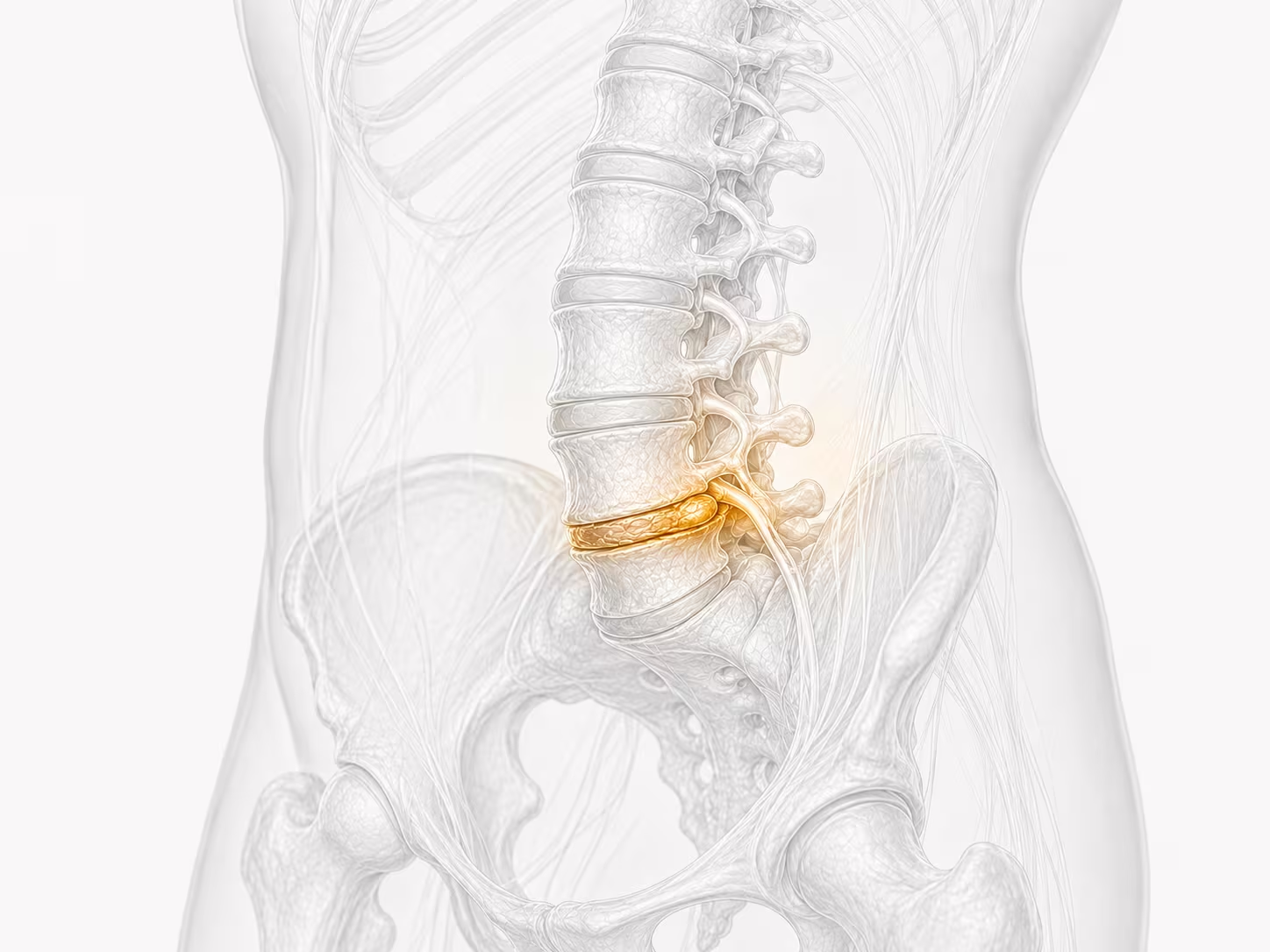
They occur when an intervertebral disc deteriorates and part of its contents slips out. This can cause pain and, if a nerve root is compressed, also discomfort that radiates down an arm or a leg.

The chronification of back pain can not only limit movement, but also your mood or your day-to-day life.
The back is involved when walking, sitting, bending over, lifting weights, working or playing sport.
When it hurts, you can start avoiding movements, reducing your activity and overloading other areas of the body.
Pain can have different origins. That is why, at EONLIFE Clinic, we study the origin of your pain and previous treatments carried out in order to redefine the most appropriate approach: physiotherapy, therapeutic exercise, medical treatment, interventional treatment or a combined strategy.
Common symptoms and causes of back pain
Pain when getting up or changing posture
Stiffness and loss of mobility
Pain when sitting or standing
Pain radiating down a leg or an arm

How we assess back pain
Medical evaluation and examination
Testing and diagnostics
Personalised treatment plan
Recovery tracking
What you can expect from the treatment
The progression depends on the origin of the pain, the degree of impairment, the duration of the condition, the state of the tissues and the patient's involvement. That is why we work with realistic goals and medical follow-up.
Reduce pain and restore movement
Regain strength and prevent relapses
If back pain is limiting your day-to-day life, don't normalise it: find out what's going on
Frequently asked questions
What can cause back pain?
It can be due to many causes: muscle overload, poor posture, lack of exercise, joint wear and tear, disc problems or nerve irritation. In many cases there is no single cause and the pain appears due to a combination of several factors.
When should I consult for back pain?
If the pain is severe, lasts more than a few days, recurs frequently or limits your activities. It is also advisable to consult promptly if it appears after an injury or is accompanied by other symptoms such as fever, weakness in the legs, loss of sensation or problems with bowel or bladder control.
How do I know if the pain is coming from a muscle or a disc?
It's not always easy to tell without a medical assessment. Muscle pain tends to be more localized and related to certain movements or exertion. When there is irritation of a disc or a nerve root, the pain can radiate down the leg and be accompanied by tingling, numbness, or loss of strength.
Is every pain that goes down the leg sciatica?
No. Sciatica occurs when the sciatic nerve, or one of the nerve roots that form it, is irritated or compressed. There are other muscular, joint or hip problems that can also cause pain that radiates down the leg.